America’s Backbone

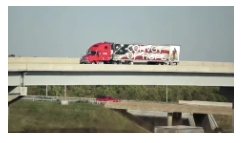
Several years ago, I had the opportunity to come alongside a friend as he endeavored to restart a dormant trade school in Blairsville, PA, about an hour east of Pittsburgh. The school, which had once been a premier location for teaching all aspects of automotive and truck maintenance and repair skills, fell victim to the 2017 student loan scandal.
Unfortunately, despite the growing need for trained automotive and truck technicians and the lack of local, state and federal government support, my friend’s efforts in restarting the school were unsuccessful.
I was reminded of this recently when I came across the following Facebook post by Cheryl Purcell that highlighted the growing need for service professionals in all areas of the economy, something our country needs to be more mindful of as we embark on this new year.

The man in the three-thousand-dollar suit glanced at my hands before he even looked at my face. “Maintenance is down the hall,” he said politely. “Air conditioning issue?”
I knew exactly what he saw. Knuckles scarred from decades of wrench work. Hands thick from turning bolts in freezing truck stops. A permanent line of grease beneath my nails that even my best scrubbing can’t erase.
I looked at his hands—smooth, manicured, topped off with a heavy gold watch. “No, sir,” I said, my voice a little too loud for the pristine high-school library. “I’m here for Career Day. I’m Jason’s father.” He blinked, gave a stiff smile, but his eyes said what he didn’t: You? Really?
My name is Mike Riley. I’m 58 years old. I’ve been a long-haul truck driver for thirty years. I’m a widower, a veteran, and a dad who tries his best. My son Jason attends this polished suburban school where everything smells like new textbooks and wealth.
This was Sarah’s school—my late wife. She taught here, loved here, lived here. After she passed, the school created a scholarship in her name. So, when Jason told his teacher I was a “logistics and supply chain specialist” and should speak at Career Day, I felt like saying yes was a way of honoring her.
I parked my old F-150 between a luxury SUV and a spotless German sedan. I walked in wearing my best jeans, a fresh flannel, and boots I’d shined twice. Inside the library, the lineup of presenters read like a magazine cover. Dr. Chen, neurosurgeon, opened with a futuristic video on brain mapping. Mr. Davies, the finance dad with the gold watch, followed with stock charts and phrases like “leveraging capital” and “Q4 positioning.”
Jason sat in the back row, shoulders hunched, wishing he could disappear. Then the principal touched my arm. “Mr. Riley? You’re next.”
I walked to the front with nothing but my own voice. No slides. No videos. Just the truth. “Good morning,” I began. “My name is Mike Riley. I’m not a doctor or an investor. I didn’t finish college. I’m a truck driver.” Murmurs. Curious glances. A few raised eyebrows. “My son calls me a logistics expert. Which I guess means I drive a very big truck a very long way. And I figure I’m here to explain why that matters.” I turned to Dr. Chen. “What you do saves lives. But the tools you use—every circuit, every wire, every plastic casing—those didn’t appear out of thin air. Someone packed them in a crate. Someone loaded that crate on a truck. Someone drove it across the country.”
Then I nodded toward the finance dad. “And sir, those numbers you showed? They represent real things—food, medicine, steel, supplies. This country doesn’t run on unlimited Wi-Fi and spreadsheets. It runs on wheels. On people willing to travel thousands of miles so shelves stay full and hospitals stay stocked.” The room grew still.
“In March 2020,” I said, “when everything shut down, you stayed home. You did puzzles. You baked bread. But drivers were told to keep going. Some days It felt like I was the only person on the highway. I delivered 40,000 pounds of toilet paper once. My dispatcher cried on the phone because her own mom couldn’t find any. You can’t Zoom a bag of flour. You can’t download hand soap.” Students leaned forward. Teachers nodded.
“Two winters ago, I was hauling insulin across Wyoming. A blizzard shut the interstate. I sat in that cab for three days—twenty below zero—listening to the hum of the refrigeration unit. If that unit died, so did the medicine. I wasn’t thinking about the cost. I was thinking about the family waiting for it.”
I scanned the room. Jason was sitting up straight now. A student in a “Future CEO” shirt raised his hand. “Sir… don’t you regret not going to college? My dad says jobs like yours mean people didn’t have other choices.” The room froze.
I smiled gently. “Son, when the lights go out, you call a lineman, not a business professor. When the pipes burst, you don’t reach for a textbook—you call a plumber. And when you walk into a store expecting food on the shelf, you’re relying on farmers, factory workers, warehouse crews, dispatchers, and drivers like me”. I paused.
“Those careers aren’t fallbacks. They’re foundations.” A voice spoke from the back. Quiet at first. “My mom’s a dispatcher.” A skinny kid stood up, eyes shining. “She works nights. Holidays. She’s the one who finds drivers when hospitals need supplies. People yell at her all the time when packages are late, but she keeps going. She isn’t less important than anyone else.” He looked at the CEO shirt kid. She’s a hero. And so is he.” He pointed at me.
The room fell silent. Then applause. Real, heartfelt applause. Jason walked up and stood beside me. He didn’t speak; he just put his arm around me. And that was enough.
Later, on the drive home, he finally said, “Dad… I had no idea about what you’ve done out there.” “It’s just the job,” I said. “No,” he whispered. “It’s so much more.”
Here’s the truth:
This country isn’t held up by titles or corner offices. It’s held up by callused hands, tired feet, and people who show up in storms, in shutdowns, in the middle of the night when no one else can. We are not the backup plan. We are backbone. So next time you ask a young person what they want to be, don’t just say, “Where are you going to college?”
Try asking, “What do you want to build? What do you want to keep running? What will you help carry?” And if that kid says, “I want to weld,” “I want to fix engines,” “I want to deliver supplies,” “I want to drive trucks like my dad,” look them in the eye and say: “This country needs you. We’re counting on you.”


Comments